3D Solar System Explorer
Reviews
Description
Game Introduction
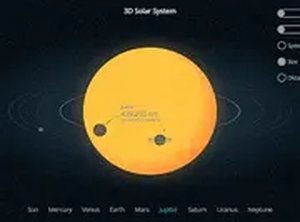
3D Solar System Explorer is an interactive space simulation designed to help users learn about the planets orbiting our sun. The tool presents the solar system in a full three-dimensional view, with the option to switch to a two-dimensional layout for a different perspective. Users can adjust the speed at which planets rotate around the sun, compare the sizes of planets side by side, and observe the distances between them. This makes it a practical resource for understanding the scale and motion of our cosmic neighborhood. The simulation works directly in a web browser without any downloads or installations. It is suitable for children, students, and anyone curious about astronomy. The interface is intuitive and encourages exploration at the user's own pace. By interacting with the simulation, users can develop a clearer mental model of how planets move and relate to one another in space.
How to Play
To begin, select either the 3D or 2D view from the main screen. Use the settings menu to increase or decrease the speed of planetary rotation around the sun. A side view option allows you to compare the sizes and distances of planets more easily. Navigation is simple: click or tap on any planet to learn more about it. The simulation runs smoothly on both desktop and mobile devices, and you can enable full screen for a more immersive experience. There are no complex controls or timers, so you can explore at your own pace. The tool is designed to be accessible to users of all ages and experience levels.
Game Features
Features include the ability to switch between 3D and 2D views for different learning perspectives. Users can compare planet sizes and distances using a side view. The rotation speed is adjustable, allowing you to slow down or speed up the simulation. The tool is fully playable on mobile devices and supports full-screen mode for an enhanced experience. All content is presented in a clear, educational manner without any distracting elements. The simulation is free to use and does not require any downloads or registration.
Tips for Success
To get the most out of this educational tool, start by exploring each planet individually to learn its unique characteristics. Use the speed control to observe orbital patterns at a comfortable pace. Compare planets side by side to better understand their relative sizes and distances. Regular exploration will help you build a mental map of the solar system. The more you interact with the simulation, the more intuitive space concepts become.
✅ Compatibility & Testing
Faq
Related Picks

Burger Counter Management Game
A fun, fast-paced burger assembly game with simple controls and daily goals. Perfect for quick play sessions.

Stellar Enterprise Idle Strategy
A relaxing idle strategy game that rewards patience and smart resource management. Perfect for space enthusiasts.
Happy Town City Builder
A relaxing city builder with simple controls and charming graphics. Perfect for casual players who enjoy creative simulation games.
Ice Cream Parlor Management Sim
A delightful management sim that blends creativity with business strategy. Perfect for family fun.

Summer Smoothie Shop Simulator
A relaxing, colorful smoothie-making game that is easy to learn and free to play.
Be Signal Traffic Control
Be Signal offers a fun, free traffic control challenge that tests your timing and strategy. Perfect for quick thinking fans.
Idle Forest Manager 3D Tycoon Sim
A calm, family-friendly idle game with satisfying progression and a peaceful 3D forest setting.
MyDream Universe Space Simulator
A relaxing sandbox game where you build your own solar system. Perfect for creative exploration.